View the updated "Resident's Overview to Radon" for more details regarding testing your home. Radon comes from granite deposits located deeply underground. The gas can enter buildings by seeping in with cracks in the structure, openings around drains pipes or under cellar pieces.
How much does it cost to fix radon in house?
The cost of a mitigation system may vary according to the home's design, size, foundation, construction materials and the local climate. Radon reduction systems average costs nationally are $1,200 with a range from $800 to $1500 common depending on house and market conditions.
Many people are not conscious that harmful levels of radon gas can gather in their home. In fact, radon represent regarding 21,000 fatalities from lung cancer cells yearly, according to the EPA. While that figure is no place near the 480,000 deaths a year brought on by smoking, it's still considerable. According to the American Cancer cells Culture, radon is the primary cause of lung cancer cells amongst non-smokers. It's an unseen gas that originates from the dirt listed below the residence's structure.
Does seller have to fix radon?
It's very likely that your future buyer will make you fix the radon problem before they will purchase the home. It's good to just take care of it during your real estate deal. Sometimes the seller pays for it all, sometimes they fund a credit and sometimes there is a split.
A lot of these options for radon reduction need maintenance, as well as it is important to continuously replace any type of fans or filters as required to continue proper functioning. Because study, a considerable Helpful site result (95% CI) was gotten for the Bq/m3 category.
What kind of cancer is caused by radon?
Radon decays quickly, giving off tiny radioactive particles. When inhaled, these radioactive particles can damage the cells that line the lung. Long-term exposure to radon can lead to lung cancer, the only cancer proven to be associated with inhaling radon.
The threats to your wellness from radon
The Canadian standard for radon in interior air for residences is 200 Becquerels per cubic metre (200 Bq/m3). A Becquerel is a system that gauges the exhaust of radiation per second. The radon level in a house ought to not be above the guideline.
Is radon really a big deal?
Radon is a radioactive gas that has been found in homes all over the United States. It comes from the natural breakdown of uranium in soil, rock, and water and gets into the air you breathe. Radon typically moves up through the ground to the air above and into your home through cracks and other holes in the foundation.
The U.S. Environmental Protection Agency (EPA) has actually determined radon as the second leading root cause of lung cancer in the United States. Several homes consist of radon concentrations that are high enough to offer their passengers life time direct exposures that could enhance their danger of developing lung cancer cells.

Why is radon bad for you?
Radon produces a radioactive dust in the air we breathe. The dust is trapped in our airways and emits radiation that damages the inside of our lungs. This damage, like the damage caused by smoking, increases our risk of lung cancer.
How long does radon stay in the air?
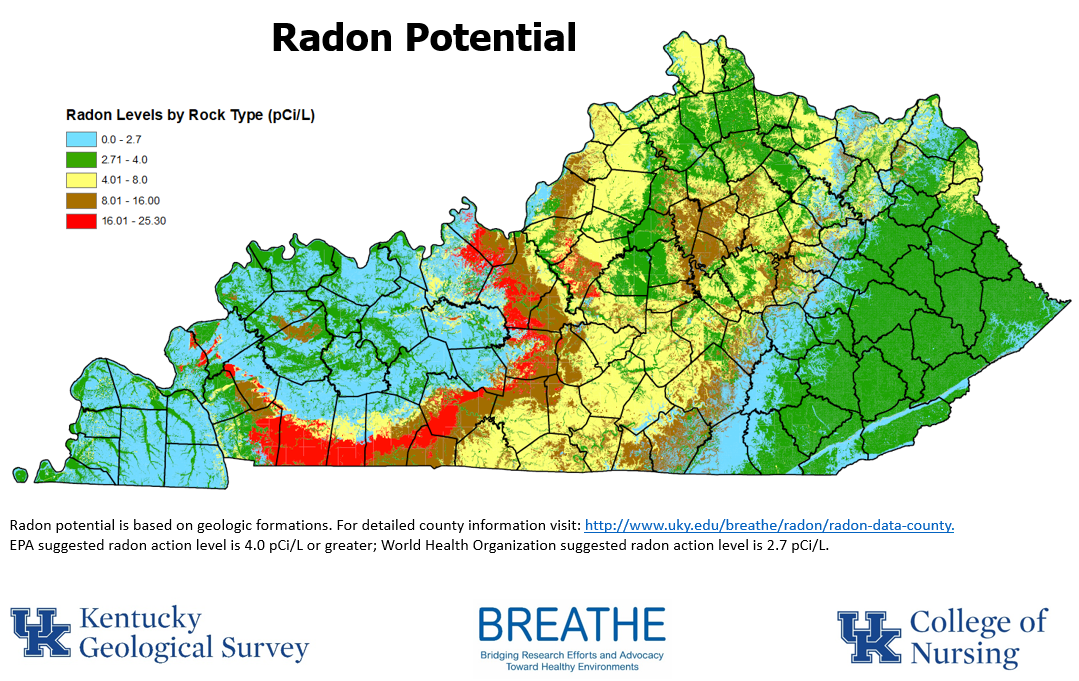
It can be found in all 50 states. Once produced, radon moves through the ground to the air above. Some remains below the surface and dissolves in water that collects and flows under the ground's surface. Radon has a half-life of about four days - half of a given quantity of it breaks down every four days.
How do I know if my house has radon?
In fact, you're probably breathing it in every day, even if it's at a low level. However, you can't tell if you're breathing it in at a high level. The danger in radon exposure is that you can't see it, taste it, or smell it. And you won't have any symptoms to alert you.
- The Canadian guideline for radon in indoor air for homes is 200 http://www.mediafire.com/file/ytqt1k69916t439/267529.pdf/file Becquerels per cubic metre (200 Bq/m3).
- Over the years, data that tracks radon levels indicates that a big percentage of Pennsylvania houses have a major radon trouble.
- Radon gas is dangerous, and if the problem goes without treatment, the radon focus continues to rise inside your house.
- Radon gas enters your residence or other home from the outdoors, and in time, slowly builds up to hazardous degrees that can result in an enhanced danger of lung cancer cells or respiratory system concerns.
- Radon gas testing will certainly aid guarantee your safety, as well as the process of radon screening is strongly suggested by The Division of Environmental Management (DEP) followed by reduction and remediation if required.
What causes radon?
Being exposed to radon for a long period of time can lead to lung cancer. Radon gas in the air breaks down into tiny radioactive elements (radon progeny) that can lodge in the lining of the lungs, where they can give off radiation. This radiation can damage lung cells and eventually lead to lung cancer.
How do I make my house safe from radon?
Install a layer of gas-permeable aggregate, such as four inches of gravel, beneath the slab or flooring system of your home if you don't have a crawlspace. Cover this layer or your crawlspace floor with plastic sheeting to stop radon gas from moving past that level and into your home.
Does home insurance cover radon mitigation?
homeowners insurance and radon remediation While home insurance is designed to financially protect you from sudden and unexpected perils such as fire or theft, it typically won't cover things that can be considered related to home maintenance like radon testing and mitigation.
Is radon only in the basement?
Radon is completely odorless as well as being invisible. Because it is often found unexpectedly in basements, some people mistakenly believe that it only occurs in basements. Most commonly homes with basements are suspect for having higher radon levels.
How common is radon in a home?
It's common: About 1 in every 15 homes has what's considered an elevated radon level. The gas is odorless and invisible, says the EPA, and it causes no immediate symptoms, so the only way to know if your home is affected is by testing your individual residence.
Is radon something to worry about?
The average home has about 1.3 pCi/L of radon. Such levels aren't enough to worry about, but under the right conditions, they could make you sick. According to the EPA, a nonsmoker who was exposed to average levels of radon for a lifetime would have a 1 in 500 risk of developing lung cancer.
Is radon heavier than air?
Radon gas is approximately 7.5 times heavier than air. It is however a noble gas with no chemical affinity but is easily influenced by air movements and pressure. In a house with forced air heating and cooling, radon gas can easily be distributed throughout the entire dwelling.
Does Radon make you tired?
The more uranium there is, the more radon there is. That makes radon the second leading cause of lung cancer after smoking. But even minor symptoms like headaches, feeling unusually tired, itching or burning eyes, irritated skin, nasal congestion, a dry throat or nausea could be due to your home's indoor air quality.
Is a radon level of 5 bad?
Safe radon levels. The best radon level measurement would be zero. The average global outdoor radon level varies between 5-15 Bq/m3, equal to 0.135-0.405 pCi/L. For every 99.9 Bq/m3, or every 2.7 pCI/L increase in long term radon exposure, lung cancer risk rises 16 percent.